
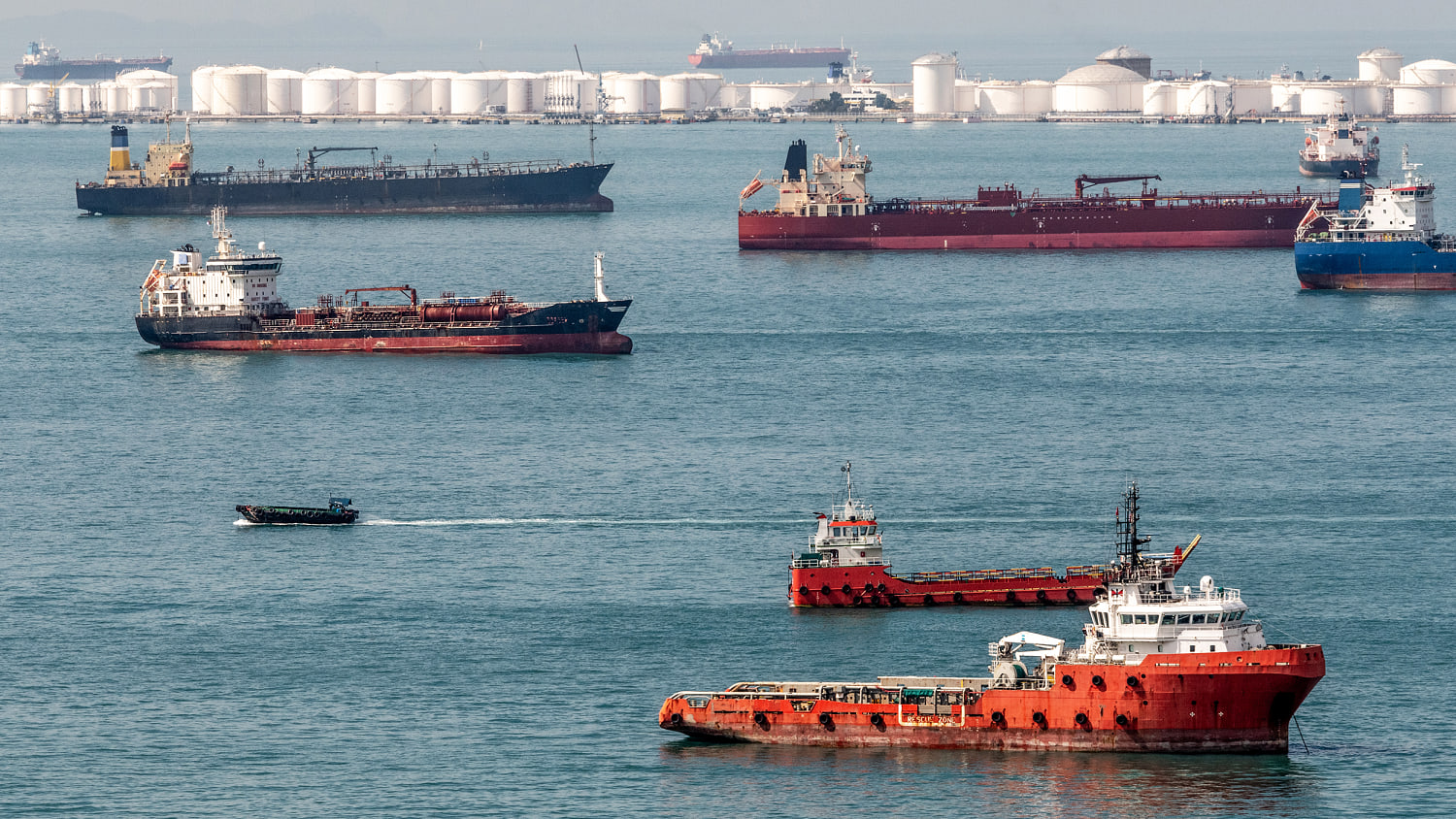
While the world watches the Strait of Hormuz with bated breath, another critical waterway, far removed yet profoundly interconnected, is sending shivers down the spines of policymakers and military strategists in Washington D.C. The ongoing maritime chess match in the Persian Gulf isn't just about oil; it's a stark reminder of the fragile arteries of global trade and the potential for a far more devastating showdown. Guardians of the Taiwan Strait – that narrow, turbulent body of water separating mainland China from the democratic island of Taiwan – are increasingly worried about the precedent the Hormuz crisis sets for any future clash between the United States and China, a confrontation with far graver implications for American economic stability and national security.
The Shadow of Hormuz: A Global Precedent
The Strait of Hormuz, through which roughly a fifth of the world's oil supply passes, has been a powder keg for decades. Recent escalations, including tanker seizures and heightened military presence, have brought the region to the brink. For the United States, a stable flow of oil from the Middle East is vital, impacting gas prices at home and the broader global economy. However, the potential for disruption in the Taiwan Strait dwarfs even the immediate concerns in Hormuz, not just due to trade volume, but because it involves two of the world's most powerful militaries directly confronting each other.
“What we’re seeing in Hormuz is a real-time stress test of international maritime law and freedom of navigation,” explains Dr. Evelyn Reed, a senior fellow specializing in maritime security at the Council on Foreign Relations. “It’s a low-intensity conflict with high-stakes economic consequences. But the lessons learned by Beijing from how the U.S. and its allies respond, or don't respond, to these provocations are invaluable. It could inform their strategy for a much more ambitious move.”
The Taiwan Strait: A Geopolitical Fault Line
The Taiwan Strait isn't merely a shipping lane; it's a profound geopolitical fault line. China views Taiwan as a renegade province that must be reunified with the mainland, by force if necessary. The United States, while acknowledging the 'One China' policy, also maintains a robust unofficial relationship with Taiwan, providing defensive weaponry and maintaining a strategic ambiguity regarding its military intervention in the event of an attack. This delicate balance has held for decades, but Beijing's increasing assertiveness and military modernization are making that balance increasingly precarious.
An overwhelming amount of global trade, particularly in high-tech goods, traverses the Taiwan Strait. Taiwan itself is the world's leading manufacturer of advanced semiconductors, the microchips that power everything from our smartphones and cars to America's most sophisticated military hardware. Any disruption to this flow would not only send shockwaves through global supply chains, but could cripple key sectors of the American economy. “The economic ramifications of a conflict in the Taiwan Strait would make the current supply chain woes look like a walk in the park,” notes Dr. Reed. “We’re talking about a complete halt in the production of essential components, affecting everything from defense contractors to consumer electronics. It’s an economic catastrophe waiting to happen.”
Implications for American Households and Industry
For average Americans, the direct impact of a crisis in the Taiwan Strait would be immediate and severe. Imagine a world where your new iPhone is perpetually out of stock, where the price of a new car skyrockets due to a lack of crucial computer chips, or where everyday electronics become scarce commodities. Beyond consumer goods, American industries, from automotive to aerospace, are heavily reliant on components produced in Taiwan and transported through its surrounding waters. A blockade or conflict would gut these industries, leading to mass layoffs and a significant downturn in economic growth.
Furthermore, a military confrontation between the U.S. and China, two nuclear-armed powers, carries the unimaginable risk of escalation. While policymakers fervently hope to avoid such a scenario, the increasing frequency of Chinese military exercises near Taiwan and U.S. freedom of navigation operations through the strait highlight the growing danger. The U.S. commitment to its allies in the Indo-Pacific, including Japan and South Korea, would also be severely tested, potentially pulling America into a wider regional conflict.
Navigating a Treacherous Future
The lessons from Hormuz are clear: global choke points are vulnerable, and even limited disruptions can have far-reaching economic consequences. For the Taiwan Strait, the stakes are exponentially higher. Washington must continue its diplomatic efforts to de-escalate tensions, while simultaneously bolstering Taiwan's self-defense capabilities and reinforcing its own military presence in the region to deter potential aggression. Strengthening alternative supply chains and investing in domestic semiconductor manufacturing are also crucial steps to mitigate future risks.
As the international community grapples with the immediate challenges in the Middle East, the ominous shadow of the Taiwan Strait serves as a potent reminder of the complex and interconnected nature of global security. For Americans, understanding this distant geopolitical flashpoint isn't just an academic exercise; it's a critical step in preparing for potential economic turbulence and safeguarding national interests in an increasingly volatile world. The quiet anxieties surrounding the Taiwan Strait today could very well become the defining geopolitical crisis of tomorrow, demanding strategic foresight and unwavering resolve from American leadership.

💬 Comments (0)
No comments yet. Be the first to share your thoughts!
Leave a Comment