
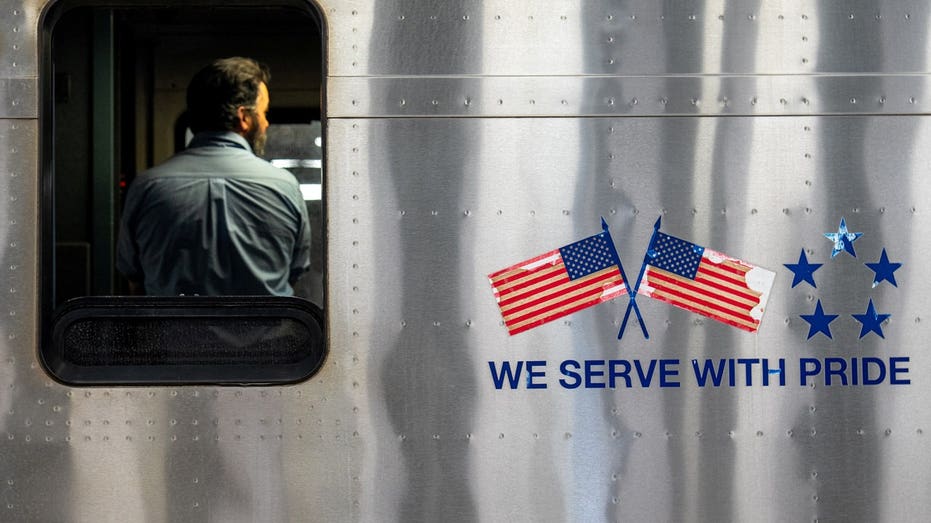
A seismic shift has hit the daily grind for hundreds of thousands of Americans on the East Coast. The Long Island Rail Road (LIRR), the nation's largest commuter rail line and a vital artery for the New York metropolitan area, ground to a halt early Saturday morning as workers initiated a historic strike. This unprecedented walkout has plunged over 330,000 commuters into chaos, forcing them to scramble for alternative transportation and threatening to ripple across the region's economy.
At the stroke of 12:01 a.m., five unions representing approximately 3,700 LIRR employees — including critical personnel like ticket clerks, locomotive engineers, signalmen, electricians, and machinists — officially walked off the job. This marks only the fourth strike in the rail line's extensive history, underscoring the severity of the unresolved labor dispute. The LIRR confirmed in a stark statement that service has been suspended indefinitely, advising the public to 'avoid nonessential travel and work from home if possible.'
For many Americans, particularly those residing in the sprawling suburbs of Long Island and commuting into New York City, the LIRR is more than just a train; it's a lifeline. It’s the conduit that connects homes to livelihoods, families to opportunities, and communities to the heart of the nation's financial capital. The disruption immediately impacts not only the individual commuter but also businesses that rely on their workforce's ability to reach their offices.
The Battle Over the Bargain
The core of the dispute lies in heated contract negotiations between the unions and the Metropolitan Transportation Authority (MTA). Leading up to the strike, a proposed contract included work-rule changes and annual wage increases of 3% over three years. However, the deal fractured over a proposed fourth-year wage increase, with unions demanding a 5% raise for that final year. MTA officials have firmly stated their inability to meet this demand, warning that capitulating could trigger significant fare increases for commuters – a politically sensitive prospect.
Kevin Sexton, National Vice President of the Brotherhood of Locomotive Engineers and Trainmen, painted a grim picture of the stalled talks. 'We’re far apart at this point,' Sexton acknowledged, expressing regret for the situation. 'We are truly sorry that we are in this situation.' Conversely, MTA Chairman Janno Lieber countered, claiming the agency 'gave the union everything they said they wanted in terms of pay' and suggesting that union leaders might have intended to strike all along, regardless of the MTA's concessions.
This blame game highlights the entrenched positions of both sides, making a swift resolution seem increasingly distant. Meanwhile, New York Governor Kathy Hochul minced no words, decrying the LIRR strike as 'reckless' and 'unacceptable.' She emphasized the severe consequences for commuters and businesses alike, urging both parties to return to the negotiating table.
Widespread Impact for Americans
The implications of this strike extend far beyond the immediate inconvenience for Long Island commuters. For businesses operating in New York City, particularly those in the financial services, tech, and creative industries that draw heavily from the suburban talent pool, a sustained LIRR shutdown could translate into significant productivity losses. Employees unable to reach their workplaces, or forced to endure arduous, multi-hour commutes via limited bus services and overcrowded subway lines, will undoubtedly face diminished efficiency.
The MTA, in an attempt to mitigate the chaos, has activated a contingency plan. This involves operating limited weekday shuttle bus service during peak commuting hours, connecting select Long Island locations to subway stations in Queens. However, these services are a mere fraction of the LIRR's capacity and are explicitly designated for 'essential workers and those who cannot telecommute,' leaving the vast majority of regular commuters to fend for themselves. Expect significant congestion on roads, an unprecedented surge in demand for ride-sharing services, and increased pressure on existing subway lines that were already strained.
Beyond the daily commute, there are broader economic concerns. The Long Island economy is deeply intertwined with its connection to New York City. Small businesses on Long Island that cater to commuters, from coffee shops to dry cleaners, will likely see a downturn in activity. Similarly, businesses in Manhattan that rely on the influx of suburban workers could experience reduced foot traffic and patronage.
Looking Ahead: A Nation Watches
As the LIRR strike continues, all eyes remain fixed on the negotiating table. The immediate future for hundreds of thousands of Americans is uncertain, contingent on whether union leadership and MTA officials can bridge the chasm separating their demands. This situation serves as a stark reminder of the delicate balance between labor rights and the essential services that underpin our nation's economic arteries. For Americans across the country, particularly those in other major metropolitan areas, this LIRR strike offers a cautionary tale about the potential for widespread disruption when critical infrastructure faces a labor dispute. The hope remains that a resolution can be found swiftly, allowing Long Island to once again move forward, literally and figuratively.
💬 Comments (0)
No comments yet. Be the first to share your thoughts!
Leave a Comment