
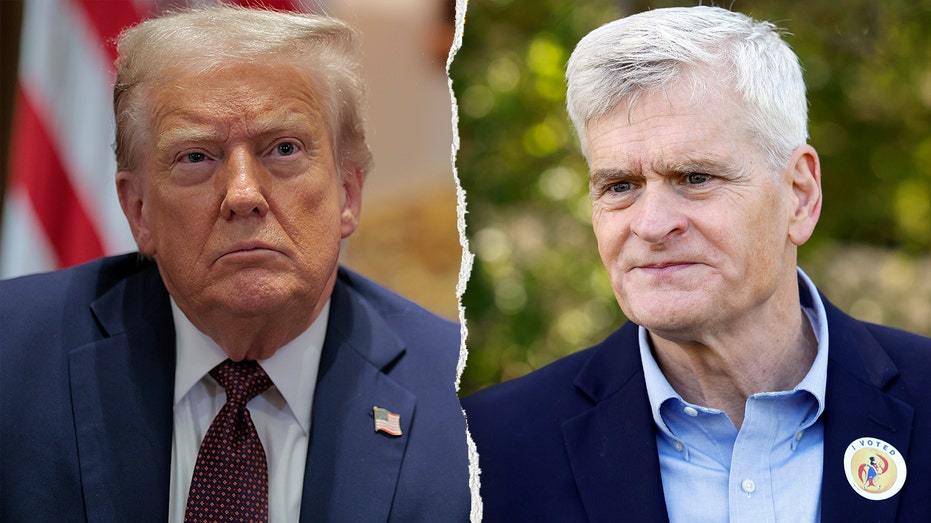
In a move that underscores his relentless grip on the Republican Party, former President Donald Trump is taking his political warpath to Louisiana, targeting incumbent Senator Bill Cassidy. Fresh off a successful campaign to unseat five Indiana state senators who opposed his redistricting efforts, Trump's sights are now firmly fixed on Cassidy, a Republican who dared to vote for his impeachment more than five years ago. This high-stakes primary battle in the solidly red Southern state is more than just a local contest; it's a critical barometer of Trump's immense influence and a direct challenge to the traditional GOP establishment.
Senator Cassidy finds himself fighting for his political life in a competitive GOP Senate primary this Saturday. He's up against two significant challengers, including Congresswoman Julia Letlow, who has secured the coveted endorsement of Trump and his powerful allies, including Louisiana's Republican Governor Jeff Landry. Also in the race is former Rep. John Fleming, now the state treasurer. Should no candidate clear the 50% threshold in the primary, the top two contenders will advance to a runoff election on June 27, ensuring a protracted and potentially brutal fight for the nomination. For Americans watching, this is another crucial test of how far Trump's endorsements can sway Republican voters in 2024 and beyond.
The Impeachment Vote Haunting Cassidy
Bill Cassidy's current predicament can be traced back to early 2021, when he was one of only seven Senate Republicans who voted to convict then-President Trump following his impeachment by the House. That vote, spurred by Trump's alleged role in the January 6th attack on the U.S. Capitol, was a moment of profound political courage for some, and unforgivable disloyalty for others – particularly within the Trump loyalist wing of the GOP. While Trump was ultimately acquitted by the Senate, the vote cemented Cassidy's status as a 'RINO' (Republican In Name Only) in the eyes of the former president and his most fervent supporters.
Despite this past, Cassidy has since largely aligned himself with Trump's agenda, even voting to approve Health Secretary Robert F. Kennedy Jr. However, this has not been enough to appease the 'Make America Healthy Again' movement led by Kennedy, who is now seeking political retribution. Cassidy, a doctor by profession, has expressed skepticism about Kennedy's push to reform national health policies, particularly his efforts to scale back vaccine recommendations. Kennedy allies have pointed fingers at Cassidy, who chairs the Senate Health, Education, Labor, and Pensions Committee, blaming him for effectively sinking the surgeon general nomination of Casey Means, a close Kennedy ally and top MAHA advocate, by not bringing it to a committee vote. This multi-front battle highlights the complex and often contradictory alliances within the modern Republican Party.
Trump's Public Condemnation and New Primary Rules
Trump himself has not held back, publicly labeling Senator Cassidy a "very disloyal person." On the eve of the primary, he took to social media to heap praise on Congresswoman Letlow, hailing her as a "Highly Respected America First Congresswoman." This direct intervention by the former president serves as a powerful signal to Republican voters in Louisiana, indicating who holds his favor and who he believes should represent the party's future.
Adding another layer of complexity to Cassidy's challenge are Louisiana's new primary rules. The state has moved to separate party primaries for the Senate race, a significant departure from its previous "jungle primary" system where all candidates appeared on a single ballot. This change is particularly impactful in a deeply conservative state like Louisiana, as it virtually guarantees that the primary electorate will be more ideologically aligned with the most conservative elements of the Republican Party. For a candidate like Cassidy, who has demonstrated a willingness to cross party lines or diverge from Trump, this new structure makes his path to renomination considerably tougher, forcing him to appeal to a base that is increasingly defined by its loyalty to the former president.
Implications for the Republican Party and Beyond
This Louisiana Senate primary is more than just a fight over one seat; it's a microcosm of the ongoing power struggle within the Republican Party. For Trump, a win for Letlow would further solidify his role as the ultimate GOP kingmaker, demonstrating his ability to unseat even incumbent senators who have defied him. It would send a clear message to other Republicans contemplating independent action: dissent comes with a steep political price. For Americans, this means an increasingly monolithic Republican Party, less tolerant of internal disagreement and more rigidly aligned with Trump's populist, 'America First' agenda.
Conversely, if Cassidy manages to defy the odds and secure the nomination, it would signal a potential, albeit small, crack in Trump's seemingly unshakeable influence. It could embolden other Republicans to push back against the former president's directives, creating space for a more diverse range of voices and policy approaches within the party. Political analysts are closely watching this race as a bellwether for the upcoming 2026 election cycle and beyond, particularly as Trump himself weighs a potential third run for the White House. The outcome in Louisiana will undoubtedly shape narratives and strategies for candidates across the country, influencing campaign messaging, fundraising efforts, and the overall trajectory of conservative politics in America.
Looking Ahead: The Future of GOP Loyalty
As Louisianans head to the polls, the stakes couldn't be higher for Senator Bill Cassidy and for the Republican Party itself. The primary serves as a stark reminder of the enduring power of Donald Trump's endorsements and his unwavering commitment to punishing those he deems disloyal. Regardless of the immediate outcome, the battle in Louisiana underscores a fundamental question facing the GOP: will it remain a party where ideological purity and loyalty to one figure are paramount, or can it accommodate a broader spectrum of conservative thought? The answer, in part, will be written this Saturday, with significant implications for the future of American politics and the shape of the Republican Party for years to come.


💬 Comments (0)
No comments yet. Be the first to share your thoughts!
Leave a Comment