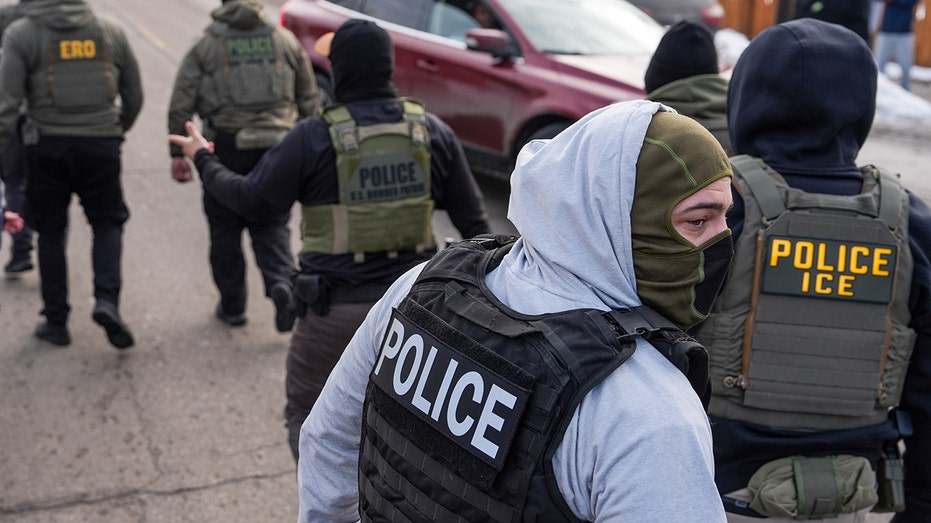
A high-stakes legal battle is brewing between the Department of Justice and several so-called 'sanctuary' states, as the federal government demands an immediate halt to policies it says are deliberately obstructing Homeland Security operations and putting federal agents in grave danger. At the heart of the dispute is the issuance of undercover license plates, a seemingly mundane administrative detail that the DOJ warns could have catastrophic consequences for national security, public safety, and the lives of those on the front lines of law enforcement.
Deputy Assistant Attorney General Brett Shumate fired off a stern warning to states like Washington, Maine, Oregon, and Massachusetts, asserting that their refusal or inhibition to issue these crucial plates to Department of Homeland Security (DHS) agents is not just a bureaucratic snag, but a 'blatantly unlawful' violation of the U.S. Constitution's Supremacy Clause. The federal government maintains that these state-level policies cripple essential intelligence-gathering and enforcement efforts, making it harder to track down dangerous criminals, from terrorists and drug traffickers to fraudsters, while simultaneously exposing federal agents to unnecessary risks.
The Undercover Plate Controversy
For years, federal agencies have relied on state DMVs to provide 'undercover' license plates – plates that don't immediately identify a vehicle as government-owned. This practice is vital for agents conducting sensitive operations where revealing their federal affiliation, often signaled by standard 'U.S. Government' plates, would compromise their cover, alert suspects, and potentially escalate dangerous situations. Imagine an agent trailing a suspected cartel member or a terror cell; a dead giveaway like a federal license plate could unravel months of investigative work, allow suspects to destroy evidence, flee, or even initiate a confrontation with law enforcement.
The DOJ's recent focus has been on Washington state, where, in a letter to Attorney General Nicholas Brown, Shumate specifically criticized the Washington Department of Licensing for reportedly refusing to issue these plates to DHS, despite continuing the practice for local and state police forces. This discrepancy, Shumate argues, is discriminatory and places federal operations at a distinct disadvantage. He has given Washington an ultimatum: comply by May 22 or face federal litigation. Similar concerns have been raised in Maine, which paused future issuance of undercover plates to DHS, and Oregon and Massachusetts are also reportedly under DOJ scrutiny.
Implications for Public Safety and Federal Authority
The core of the DOJ's argument rests on public safety. By impeding DHS agents, these state policies could inadvertently make communities less safe. As Shumate highlighted, if suspects are alerted to an officer's presence, they could take countermeasures, making arrests more dangerous for all involved, including the general public caught in the crossfire. This isn't merely about immigration enforcement, though that's often the flashpoint for 'sanctuary' policies. DHS's purview extends to counter-terrorism, drug interdiction, human trafficking, and customs enforcement – all critical areas that directly impact American security.
This showdown also reignites the long-standing tension between federal authority and states' rights, particularly concerning immigration enforcement. 'Sanctuary' policies typically limit local law enforcement's cooperation with federal immigration agents, often citing concerns about trust within immigrant communities or constitutional protections. However, the DOJ is drawing a clear line, arguing that denying tools essential for federal law enforcement crosses into unlawful interference with federal functions. Florida Attorney General James Uthmeier, for instance, has been vocal about his state's lawsuit against Washington and California over their sanctuary policies, accusing them of endangering the public.
Expert Analysis and Broader Context
Legal experts suggest that the DOJ's position on the Supremacy Clause is strong. The Constitution explicitly states that federal laws are supreme to state laws when there is a conflict. While states have broad powers, they generally cannot obstruct federal agencies from carrying out their congressionally mandated duties. "This isn't about states' rights to have their own policies; it's about whether a state can actively impede the federal government's ability to protect the nation," noted Professor Elena Rodriguez, a constitutional law scholar at Georgetown University. "If a state policy effectively renders federal law unenforceable or unnecessarily hazardous to federal agents, it's likely to be viewed as unconstitutional interference."
For Americans, the implications are significant. Beyond the immediate safety concerns for federal agents, this legal battle could redefine the boundaries of state and federal power. Should states successfully defy the DOJ on this issue, it could set a precedent for further erosion of federal enforcement capabilities, particularly in areas like border security and national defense. Conversely, a federal victory would reinforce the paramount nature of federal law in areas of national interest, potentially sparking renewed debate among civil liberties advocates and states' rights proponents.
The Path Forward
The DOJ's ultimatum signals a willingness to pursue aggressive legal action to protect its agents and operations. Should the targeted states fail to comply, the dispute will likely move swiftly into federal courts, setting the stage for a landmark legal confrontation. The outcome will not only impact the daily operations of DHS agents but also could reshape the delicate balance of power between Washington D.C. and state capitals across the country. As this saga unfolds, the question of who ultimately holds the reins of law enforcement, especially when national security is on the line, will be put to the ultimate test.