A deep and unsettling rumble is echoing through the halls of Washington D.C., as a bipartisan chorus of lawmakers raises serious concerns about a sprawling network reportedly funneling millions of dollars into groups accused of disseminating pro-Chinese Communist Party (CCP) propaganda and anti-American rhetoric right here on U.S. soil. At the center of this storm is Neville Roy Singham, an American-born, Shanghai-based Marxist mogul, whose alleged financial contributions are fueling a formidable infrastructure of non-profit organizations that critics fear are undermining American values and security.
This isn't just about abstract geopolitical rivalries; it's about the very fabric of American society and the potential for foreign influence to exploit our open systems. Members of both the House and Senate are expressing alarm over the reach and implications of Singham's network, which, according to a Fox News Digital investigation, has pumped an estimated $278 million into various non-profits since 2017 alone. This significant financial backing has ignited investigations by the Justice, State, and Treasury departments into the network's activities, including a substantial $22.5 million directed to a group known as The People’s Forum.
The Propaganda Machine and American Vulnerabilities
The core of the concern revolves around the alleged use of U.S. non-profit 501(c)(3) status as a conduit for foreign influence. Senator Marsha Blackburn (R-Tenn.), a vocal critic, highlighted this vulnerability in an interview, stating, "When you talk about the non-profits, you have to look at how China adversely uses or how China uses our non-profit 501(c)(3) status organizations to work as CCP influencers." She specifically pointed to Singham's network, asserting, "Singham's group is one of these, as they try to spread and influence other organizations and participate with other organizations in protests, in demonstrations that are going to create chaos in the streets of U.S. cities."
This strategy, often referred to as 'soft propaganda,' is viewed by many as a cunning entry point for China to exert influence without resorting to overt military or diplomatic pressure. The objective, according to lawmakers, is to sow discord, amplify anti-American narratives, and subtly shift public opinion in favor of the CCP's agenda. For Americans, this raises critical questions about media literacy, the sources of information they consume, and the often-hidden agendas behind seemingly grassroots movements.
CodePink: A Case Study in Contention
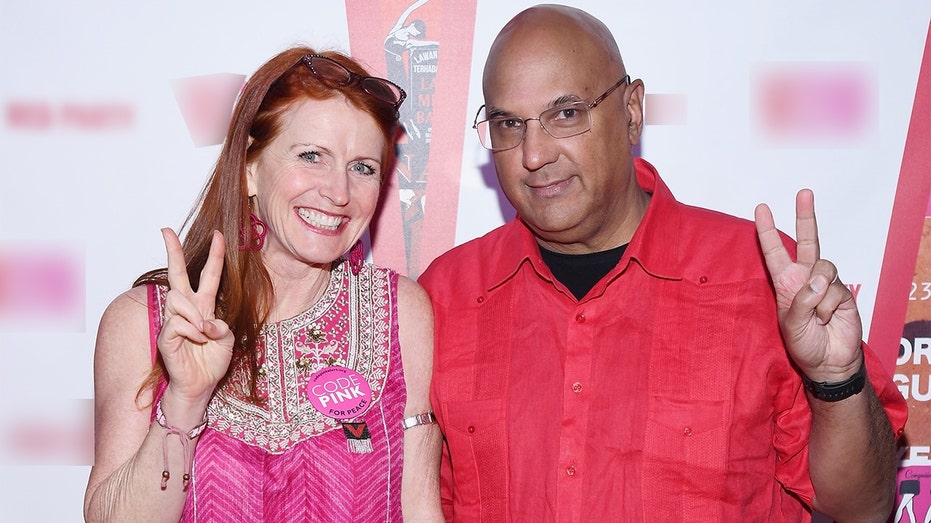
One organization frequently cited in this debate is CodePink, a long-standing anti-war non-profit co-founded by Jodie Evans, who is also Neville Roy Singham's wife. The Fox News Digital investigation revealed that CodePink received $1.33 million directly from Singham. Over the years, CodePink has garnered attention and criticism for its perceived support of communist regimes, including the Chinese Communist Party and the Cuban government. While CodePink's funding originates from Singham, not directly from the Chinese government, critics argue that this distinction is largely semantic.
Senator Josh Hawley (R-Mo.) didn't mince words, telling Fox News Digital, "CodePink are AstroTurf weirdos bought and paid for by Communist China. They get their money from the most oppressive regime on the planet." He dismissed them as "a joke," emphasizing the ethical implications of their alleged funding. The senator's strong accusations even led CodePink to file an ethics complaint against him, which Hawley dismissed as an attempt to silence him for "exposing that they take blood money from China." This contentious back-and-forth underscores the fierce ideological battle at play and the depth of the distrust surrounding such organizations.
The FARA Conundrum: Unregistered Foreign Agents?
A significant point of contention for lawmakers is whether organizations within Singham's network, including CodePink, should be required to register under the Foreign Agents Registration Act (FARA). FARA mandates that individuals or entities engaging in public relations, political work, or lobbying on behalf of a foreign government must disclose their activities and financial ties. The failure to register under FARA, if applicable, would represent a serious legal breach and further fuel concerns about covert foreign influence.
Experts in national security and foreign policy often highlight FARA as a crucial tool for transparency. "The intent of FARA is to ensure that the American public is aware when foreign interests are attempting to influence our political discourse," explains Dr. Anya Sharma, a political science professor specializing in international relations. "If these groups are indeed operating at the behest of, or significantly influenced by, a foreign power like China, then the lack of FARA registration creates a dangerous blind spot for our democracy." The ongoing investigations by various government departments will likely scrutinize this aspect closely, potentially leading to legal actions if violations are found.
Implications for American Society and the Path Forward
The implications of this alleged propaganda network for Americans are profound. Beyond the geopolitical struggle, there is a real concern about the erosion of trust in information, the polarization of public discourse, and the potential manipulation of social movements. For the average American citizen, understanding the funding sources and potential foreign ties of advocacy groups becomes increasingly important in a complex media landscape.
As these investigations unfold, the spotlight will remain firmly on Neville Roy Singham's network and its alleged role in propagating CCP narratives. Lawmakers are likely to continue pushing for greater transparency and accountability, potentially advocating for stricter enforcement of FARA and other regulations designed to counter foreign influence. The ultimate goal is to safeguard American democracy and ensure that the voices shaping public opinion are genuinely homegrown, free from the subtle machinations of adversarial foreign powers.