
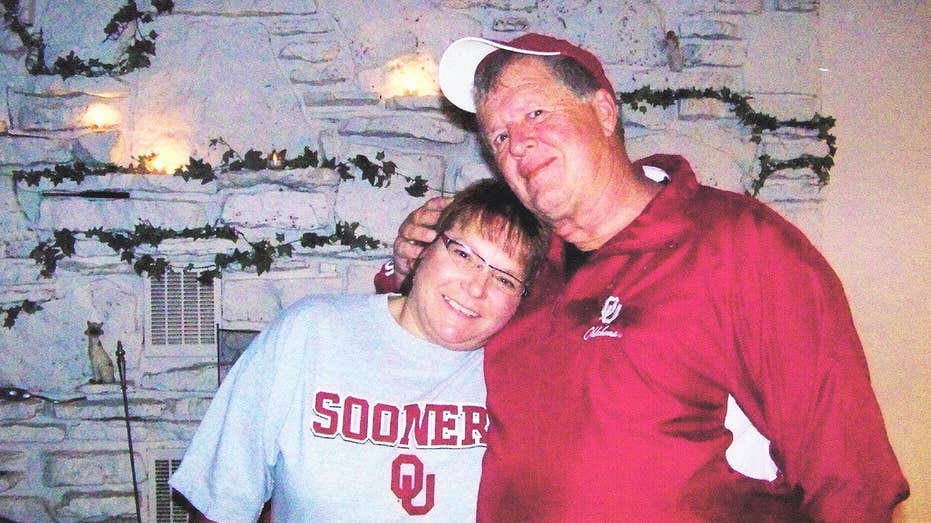
Imagine a life built on love, shared dreams, and years of trust, only for it to be utterly demolished by a single, unexpected phone call. This isn't the plot of a Hollywood thriller, but the jarring reality for Deb Proctor, an Oklahoma woman whose husband of decades was living a carefully constructed lie. The man she knew as Jeff Walton was, in fact, Ronald Stan, a Canadian who faked his own death 37 years ago, leaving behind a wife and two children and vanishing into thin air. This astonishing revelation has sent shockwaves, forcing Americans to confront the unsettling possibility of hidden identities and profound deception in their own lives.
The call came out of the blue, from an unknown number, and delivered a truth so bizarre it bordered on the unbelievable. "After gathering my composure, I went to my immediate executive and explained this bizarre phone call," Proctor recounted to Fox News Digital. Her colleagues, understandably concerned, even suggested the possibility of witness protection, fearing for her safety. But the truth was far more intricate and, in many ways, more disturbing than any spy novel plot – her beloved husband was a ghost, a man who had orchestrated his own disappearance and assumed a new identity in the United States.
Unraveling a Decades-Long Deception
Proctor, now sharing her incredible story on ABC's true crime series "Betrayal: Secrets & Lies," provides a harrowing look into the emotional fallout of such a discovery. The series, inspired by the popular "Betrayal" podcast franchise, delves into the devastating impact of scandalous confessions, financial ruin, and profound betrayals on ordinary people. Andrea Gunning, host of the "Betrayal" podcast, highlighted the core of Proctor's ordeal: "What stayed with me the most while working on Deb’s story was not just the scale of Jeff’s deception, but the deeply human process of Deb rebuilding her life after the truth was exposed."
The story began innocently enough in 1998. Proctor, then a 41-year-old divorcee with two sons, was looking for a fresh start. She turned to a dating site, where she connected with Jeff Walton. He presented himself as an Ohio State graduate, a former football player, and a fellow golf enthusiast – a perfect match for her passions. Their connection was undeniable, leading to a year of conversations before they finally met in person. Walton’s bold declaration upon seeing her – "You will marry me, won’t you?" – set the stage for a whirlwind romance. He moved in just a few months later, and by 2000, they were wed.
"I felt like this was a person that I loved very much," Proctor said, reflecting on her early hopes. "I could see us traveling together, creating a life together. I felt hopeful about the future." But beneath the surface of their seemingly idyllic life, Walton harbored a secret that would eventually shatter their world.
The Cracks Begin to Show
A year into their marriage, as Walton struggled to find consistent work, he began to weave a new layer into his fabricated past. He claimed to be a Vietnam War veteran, alleging he served in the Special Forces at just 18 years old. According to the podcast, he spun a tale of capture, months of torture, and a daring escape. These narratives, while seemingly adding depth to his character, were likely elaborate fabrications designed to explain away gaps in his history or perhaps to garner sympathy and understanding.
For American audiences, this story resonates deeply with the unsettling question of how well we truly know the people closest to us. Experts in psychology and social behavior often point out that individuals capable of such long-term deception possess unique traits, including a high degree of manipulation and a compartmentalized sense of self. Dr. Sarah Jenkins, a sociologist specializing in identity theft and fraud, notes, "Cases like Ronald Stan's highlight the remarkable psychological resilience and meticulous planning required to maintain a false identity for decades. It's not just about faking a death; it's about building an entirely new life, severing all ties, and living with constant vigilance."
The implications for Americans extend beyond individual relationships. This case underscores the vulnerabilities in our systems of identity verification and the ease with which individuals can seemingly disappear and reappear under new guises. While the specific details of how Stan managed his deception are still unfolding, it raises concerns about the potential for others to exploit similar loopholes, whether for personal reasons, financial gain, or to evade justice.
What's Next for Deb Proctor and the Search for Truth
Deb Proctor's journey is now one of painful reconstruction, not just of her personal life but of her understanding of reality itself. Her decision to come forward and share her story serves as a cautionary tale, urging others to question discrepancies and pay attention to their instincts, even when confronted with deeply loved ones.
As the "Betrayal" series continues to unveil the intricacies of Ronald Stan's past and the devastating impact on Deb Proctor, the saga promises to keep viewers on the edge of their seats. For Americans, this compelling narrative isn't just a true crime story; it's a stark reminder of the hidden depths of human deception and the profound resilience required to navigate its aftermath. What started as a search for love for Deb Proctor became an unwitting exploration into the dark underbelly of identity, trust, and the secrets people carry, leaving us all to wonder how many more 'Ronald Stans' might be living among us, their pasts buried just beneath the surface of everyday life.



💬 Comments (0)
No comments yet. Be the first to share your thoughts!
Leave a Comment