
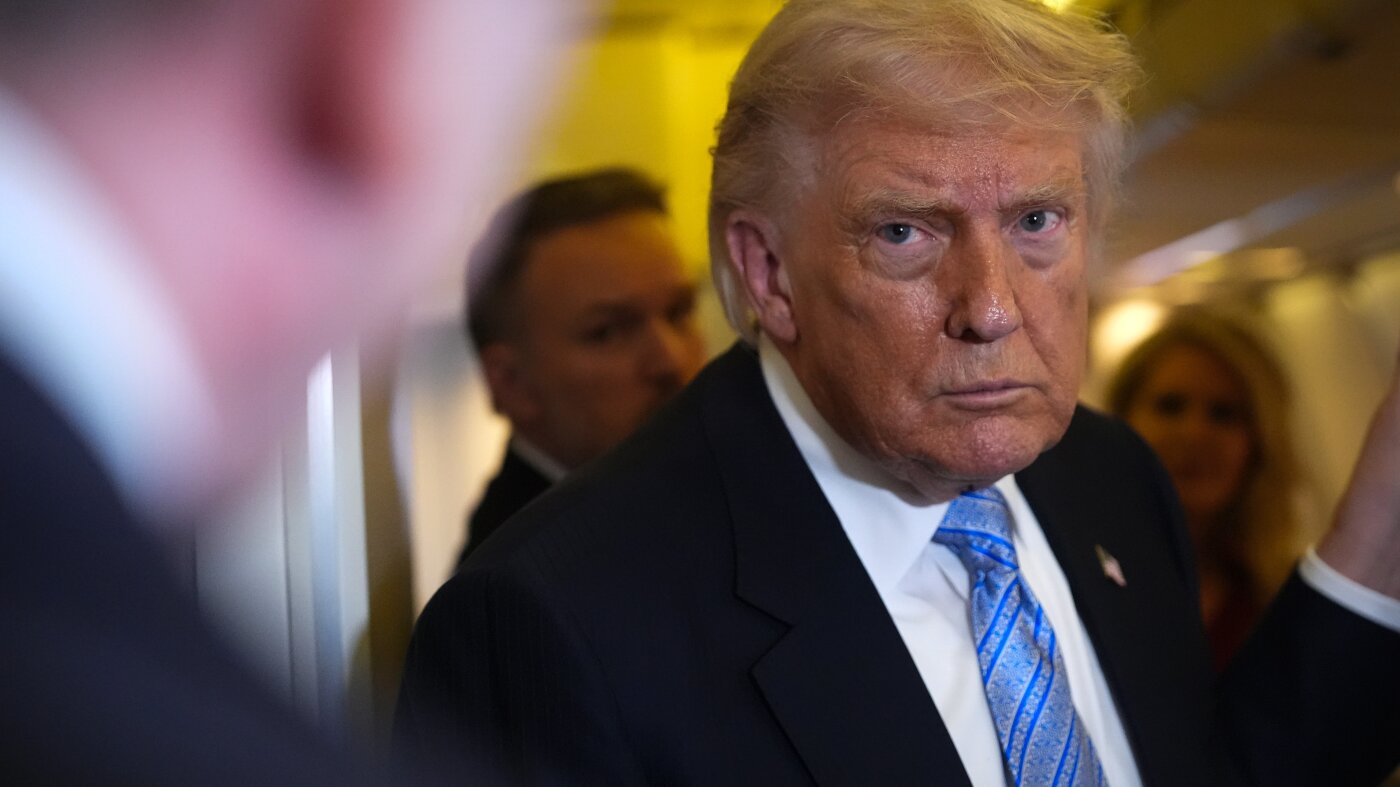
WASHINGTON D.C. – In a late-night announcement reverberating across the globe, President Donald Trump declared Friday that a joint operation between U.S. and Nigerian forces successfully eliminated a top leader of the Islamic State group in Nigeria. The targeted figure, identified as Abu Bakr al-Mainuki, was described by the President as the "second in command globally" for ISIS, a claim that immediately drew both attention and scrutiny from intelligence experts.
The high-stakes mission, executed in Africa's most populous nation, marks a critical development in the ongoing international struggle against radical Islamic terrorism. While President Trump's social media post offered scant initial details, anonymous U.S. officials later elaborated, painting al-Mainuki as a central architect of ISIS's organizational and financial networks, allegedly plotting attacks against the United States and its global interests.
Nigerian President Bola Tinubu swiftly confirmed the operation, adding that al-Mainuki was killed alongside "several of his lieutenants during a strike on his compound in the Lake Chad Basin." This coordinated disclosure underscores a burgeoning partnership between Washington and Abuja in confronting the pervasive threat of extremism in West Africa.
Who Was Abu Bakr al-Mainuki?
Born in Nigeria's Borno province in 1982, Abu Bakr al-Mainuki ascended to prominence within the Islamic State West Africa Province (ISWAP), the regional affiliate of ISIS. According to the Counter Extremism Project, a group dedicated to tracking militant organizations, al-Mainuki assumed leadership of ISWAP after the death of its previous head, Mamman Nur, in 2018. His past is believed to include combat experience in Libya during ISIS's peak activity in North Africa over a decade ago, solidifying his reputation as a seasoned militant.
The U.S. Treasury Department sanctioned al-Mainuki in 2023, signaling his established importance within the global terrorist ecosystem. However, President Trump's assertion that al-Mainuki was the "second in command globally" of the Islamic State has been met with caution by some analysts. Malik Samuel, a senior researcher specializing in insurgent groups in Nigeria at Good Governance Africa, clarified that al-Mainuki was likely the deputy to Abu Musab al-Barnawi, the leader of ISWAP who was reported deceased in 2021. Al-Mainuki is widely regarded as a pivotal figure in the formation of ISWAP following its schism from the notorious Boko Haram in 2016.
Despite the debate over his exact global rank, the significance of al-Mainuki's death is undeniable. Samuel emphasized, "If confirmed, the killing of Al-Mainuki is huge because this is the first time a security agency has killed someone this high in the ranking of ISWAP." He added that the operation's success, likely deep within ISWAP's fortified territory, has the "potential to cause chaos within the group."
Implications for American Security and Global Stability
For Americans, the elimination of a figure like al-Mainuki carries direct implications for national security. U.S. intelligence sources' claims that he was actively plotting attacks against American interests highlight the transnational nature of the ISIS threat, even when originating in seemingly distant regions. The joint operation underscores the necessity of robust international partnerships in counter-terrorism efforts, especially in regions like the Sahel, which has become a volatile hub for various militant groups.
This mission follows a directive issued by President Trump in December, instructing U.S. forces to launch strikes against the Islamic State in Nigeria. While details of those earlier operations were scarce, the recent success suggests a sustained and intensified focus on degrading ISIS capabilities in West Africa. The Nigerian military spokesperson, Samalia Uba, heralded the operation as a direct outcome of its "recently formed U.S.-Nigeria partnership and intelligence sharing efforts," confirming that the strike has "disrupted a violent terrorist network that endangered Nigeria and the broader West African region."
The U.S. military's engagement in Africa, particularly in intelligence gathering and special operations, is a critical component of its global strategy to counter extremism. This joint effort not only weakens a dangerous adversary but also bolsters the capacity of regional partners, ultimately contributing to a more stable international environment. The ongoing battle against militant groups like ISWAP, Boko Haram, and others in Nigeria and the broader Sahel region is complex and multifaceted, involving not only military action but also humanitarian aid, economic development, and governance initiatives.
What's Next in the Fight Against ISIS?
The killing of Abu Bakr al-Mainuki is undoubtedly a significant victory, but it does not signal the end of the fight against ISIS or its affiliates. Terrorist organizations are known for their resilience and ability to replace fallen leaders. The immediate challenge will be to monitor ISWAP's reaction, including potential power struggles or retaliatory attacks. U.S. officials will be closely watching for signs of fragmentation within the group or the emergence of a new leader.
Moving forward, the U.S.-Nigeria partnership will be crucial. Continued intelligence sharing, joint training, and coordinated operations will be vital to capitalizing on this success and preventing ISWAP from regrouping effectively. The broader strategy must also address the root causes of extremism, such as poverty, lack of opportunity, and political instability, which often provide fertile ground for terrorist recruitment. For Americans, this means understanding that the fight against terrorism is a long-term commitment, requiring sustained attention, resources, and strategic alliances to protect our interests both at home and abroad.


💬 Comments (0)
No comments yet. Be the first to share your thoughts!
Leave a Comment