

BATON ROUGE, La. – The political landscape in America is constantly shifting, but few battles define the current era quite like a Republican fighting for his political life after daring to cross Donald Trump. Senator Bill Cassidy of Louisiana, unlike most of his GOP colleagues who voted to convict former President Trump after the January 6th insurrection, isn't retiring quietly. He's running for a third term, and his reelection bid is shaping up to be a critical litmus test for Trump's enduring — and some say, unshakeable — grip on the Republican Party.
This Saturday's primary election in the Bayou State isn't just a local contest; it's a bellwether for the national GOP. The outcome will offer crucial insights into what Republican voters, particularly in staunchly conservative states, truly demand from their representatives in Washington. Can a Republican senator like Cassidy, who chairs the influential Senate health committee, survive a direct challenge from a Trump-backed candidate? The answer will resonate far beyond Louisiana's borders, impacting everything from legislative priorities to the future direction of the Republican Party.
The Betrayal and the Backlash
For many Louisiana Republican voters, Cassidy's vote to convict Trump felt like a profound betrayal. It was a moment that exposed deep ideological fault lines within the party, pitting traditional conservatism against the populist, personality-driven movement spearheaded by Trump. At the annual crawfish festival in Breaux Bridge, a quintessential Louisiana gathering, the sentiment among many attendees is clear. Retired deputy sheriff Kevin Dupree, shaded by a pop-up tailgate tent, unequivocally states his preference for any Republican nominee – except Cassidy.
“I'm the type of person, if you cross me, I probably won't trust you anymore,” Dupree says, his voice reflecting a widespread frustration. “I think his political career in Louisiana is finished.” This sentiment is not isolated. For a significant segment of the electorate, loyalty to Trump is paramount, and a vote against him is seen as an unforgivable offense. It underscores the challenge facing any Republican who diverges from the former president's narrative, particularly in states where Trump remains exceptionally popular.
A Party Divided: Ideals vs. Personality
Not everyone at the festival, however, shares Dupree's staunch opposition to Cassidy. Kelby Daigle, Chairman of the St. Martin Parish Republican Party, finds himself in a unique position. Not only does he admit to disliking crawfish – a bold statement in Breaux Bridge – but he's also backing Cassidy. Daigle believes Cassidy was right to convict Trump, even if he acknowledges the senator hasn't always effectively communicated his reasoning to voters. His concern, however, extends beyond this particular election.
“Conservatism is about ideas and principles, and they always make it about Trump,” Daigle laments. “What are you going to do when he's no longer in the picture?” Daigle's perspective highlights a critical debate within the GOP: whether the party can, or should, revert to a focus on traditional conservative principles once Trump's direct influence wanes. For now, however, Trump is very much in the picture, and his endorsements carry significant weight, often overshadowing policy debates.
The Trump Factor and the Challengers
The enduring power of Trump's endorsement is evident in the primary race. Dustin Jacque Arnaud, a Republican activist in Lafayette Parish, succinctly captures the prevailing sentiment among many voters: “Trump does so much for Louisiana, for this country, and the one thing he asked the people of Louisiana to do is vote for Congresswoman Julia Letlow, and I'm going to do that for President Trump.”
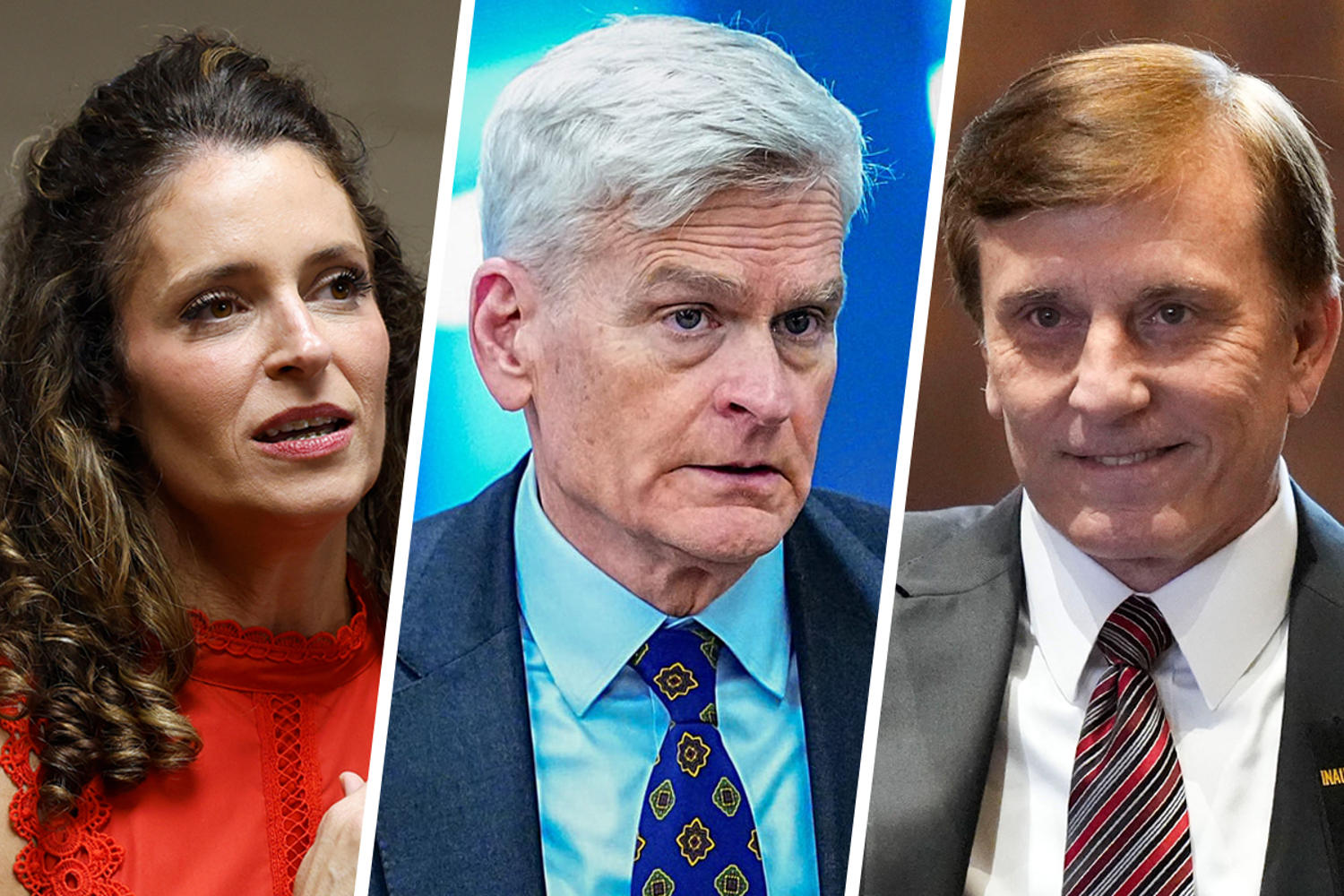
Congresswoman Julia Letlow, a former college administrator who won a special election in 2021 for the House seat her late husband, Luke, was set to assume before his tragic passing, is Cassidy's Trump-endorsed opponent. She represents the direct challenge from the MAGA wing of the party. Adding another layer of complexity to the race is State Treasurer John Fleming, a former Congressman who served in the Trump administration. Fleming has remained competitive in the polls with both Letlow and Cassidy, further fragmenting the vote among Republican contenders.
Under Louisiana's unique primary system, all candidates, regardless of party affiliation, appear on the same ballot. If no candidate secures more than 50% of the vote on Saturday, the top two vote-getters, irrespective of party, will advance to a runoff election next month. This scenario introduces an element of unpredictability, as the combined anti-Cassidy vote could propel two challengers into a runoff, or, conversely, split the opposition enough to give Cassidy a path forward.
Implications for the American Political Landscape
The outcome of this race has significant implications for the broader American political landscape. For Republicans in Washington, it will serve as a powerful indicator of how much political capital is still risked by defying Trump. A Cassidy victory might embolden other Republicans to exercise more independence, while a defeat could further solidify the party's alignment with the former president's agenda.
For American voters, particularly those who are not staunch Trump supporters, this election tests the viability of a more traditional Republican voice in Congress. Can a senator who emphasizes policy and principles, and who at one point prioritized accountability over party loyalty, still find a home in the modern GOP? The answer will help shape not only the future of the Republican Party but also the nature of political discourse and representation in the United States for years to come.
Looking Ahead: A Defining Moment
As Louisianans head to the polls, the eyes of the nation will be on this critical primary. The race for Senator Bill Cassidy’s seat is more than just a local election; it's a microcosm of the larger struggle for the soul of the Republican Party and a barometer for the enduring power of Donald Trump. The results will offer invaluable insights into what American voters truly value in their elected officials as the country navigates an increasingly polarized political environment, shaping the narrative for upcoming elections and the direction of one of America's major political parties.

💬 Comments (0)
No comments yet. Be the first to share your thoughts!
Leave a Comment