
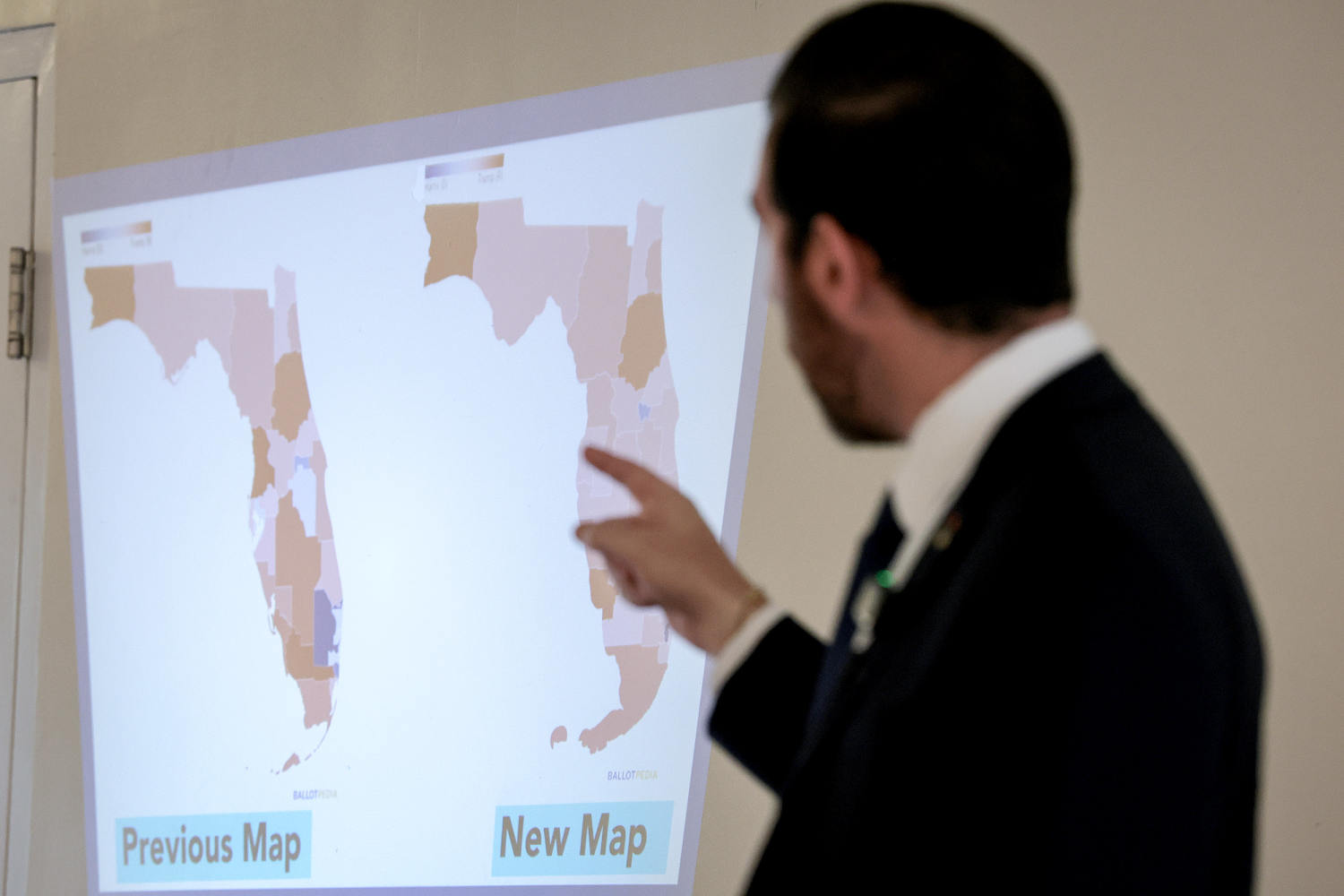
RICHMOND, VA – A political earthquake has rattled Virginia, with the state Supreme Court delivering a decisive blow to a congressional map that Democrats had championed and voters had approved. The ruling, which declares the 2021 redistricting referendum null and void due to procedural missteps by lawmakers, casts a long shadow over the Commonwealth's upcoming election cycles and could significantly alter the balance of power in Washington.
For many, this isn't just a technicality; it's a gut punch to democratic process and a potent reminder of the often-unseen legal battles that shape America's political future. The high court's decision effectively erases a map intended to create more competitive districts and potentially favor Democratic candidates, forcing Virginia back to the drawing board under a cloud of controversy and tight deadlines.
The Map That Wasn't: A Detailed Look at the Controversy
The saga began in 2020 when Virginia voters, by a narrow margin, approved a constitutional amendment that aimed to create an independent redistricting commission. This commission, comprised of an equal number of Republicans and Democrats, along with retired judges, was tasked with drawing new district lines following the decennial census. The goal was to remove partisan gerrymandering from the process, a practice long criticized for creating safe seats and reducing voter choice.
However, the amendment's implementation quickly became mired in partisan wrangling. When the independent commission ultimately failed to agree on a map, the responsibility fell to the state Supreme Court to draw the lines. The map that emerged, and subsequently approved by voters in a separate referendum in 2021, was widely seen as a victory for Democrats, creating districts that were perceived as more favorable to the party and reflecting the state's growing blue leanings.
The state Supreme Court's recent decision, however, hinged not on the merits of the map itself, but on the process through which the 2021 referendum made it to the ballot. The court found that lawmakers failed to adhere to the constitutionally mandated procedures for proposing and approving constitutional amendments. Specifically, the court ruled that the amendment was not properly read and approved by both chambers of the General Assembly in two successive sessions, as required by Virginia law.
“This is a classic case of the process being as important as the outcome,” explains Dr. Sarah Miller, a political science professor at George Mason University specializing in state constitutional law. “The court isn't saying the map itself is bad, or that the idea of an independent commission is flawed. They are unequivocally stating that the General Assembly didn’t follow the rules to get this referendum on the ballot in the first place. This undermines the legitimacy of the entire process, regardless of the map’s perceived fairness.”
Implications for American Voters and the National Landscape
The immediate impact of this ruling is significant. Virginia's congressional delegation, currently split with six Democrats and five Republicans, could see its composition shift dramatically. A new map, potentially drawn under different circumstances and pressures, could create safer seats for one party over the other, influencing the delicate balance of power in the U.S. House of Representatives.
For Americans nationwide, the Virginia case serves as a stark reminder of the ongoing battles over redistricting that play out in states across the country every decade. These often-obscure legal skirmishes have profound consequences, shaping who represents communities, what issues get addressed, and ultimately, the direction of national policy.
“Virginia has been a bellwether state for years,” notes political analyst David Chen. “It's moved from reliably red to purple and now leans blue. This decision, however, could create a temporary ripple effect, potentially giving Republicans an unexpected boost in some districts. It’s a vivid illustration of how even the most well-intentioned reforms can be tripped up by procedural technicalities, especially when partisan stakes are high.”
Furthermore, the ruling highlights the persistent tension between direct democracy (voter-approved referendums) and the procedural requirements of legislative bodies. While voters clearly expressed a preference for the new map, the court emphasized that those preferences must be expressed through legally valid channels.
What Happens Next? The Road Ahead for Virginia
With the 2021 map invalidated, Virginia faces a scramble to establish new congressional districts ahead of the upcoming election cycles. The immediate question is who will be responsible for drawing the new map. Legal experts suggest several possibilities, including a return to the state Supreme Court to draw a new map, or a special session of the General Assembly to craft emergency legislation. Both scenarios present their own challenges and opportunities for further partisan conflict.
The timeline is tight. Candidates need to know the boundaries of their districts to campaign effectively, and voters need clarity on who represents them. The longer the uncertainty persists, the more disruptive it becomes for the political process.
This decision is likely to reignite calls for clearer, more robust constitutional safeguards for redistricting processes nationwide. As states continue to grapple with the aftermath of the decennial census, the Virginia ruling underscores the importance of not only the substance of redistricting reform but also the meticulous adherence to legal and procedural requirements. The outcome in Virginia will undoubtedly be closely watched as a precedent, offering valuable lessons for other states navigating their own complex redistricting challenges in the years to come.
💬 Comments (0)
No comments yet. Be the first to share your thoughts!
Leave a Comment