
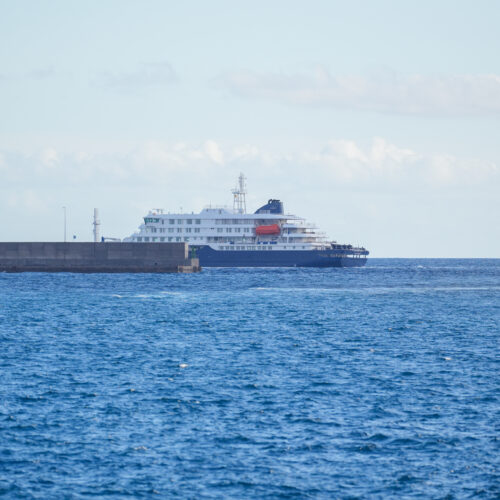
In a welcome twist to a concerning global health incident, the World Health Organization (WHO) announced Friday that a previously reported U.S. case of hantavirus, linked to an outbreak aboard the MV Hondius cruise ship in the South Atlantic, has been confirmed as a false positive. This crucial development shrinks the total outbreak count from 11 to 10 cases, providing a significant sigh of relief, particularly for American citizens who had been closely following the unfolding drama.
The U.S. case in question belonged to Dr. Stephen Kornfeld, an American physician who played a critical role in responding to the outbreak after the ship's own doctor fell ill. Dr. Kornfeld’s initial 'mildly positive' result, reported by U.S. health officials, had been considered 'inconclusive' by the WHO but was still included in their May 13 outbreak report. The journey from uncertainty to clarity involved multiple tests and a deep dive into the specifics of PCR diagnostics, highlighting the complexities health authorities face in managing emerging infectious disease threats.
Unraveling the 'Mildly Positive'
Dr. Kornfeld, speaking to CNN earlier this week, shed light on the initial testing process. While still aboard the Hondius, prior to evacuation, he and other crew members underwent nasal swab testing, with samples sent to the Netherlands for PCR analysis. The results from two different labs painted a contradictory picture: one reported a negative result, while the other indicated a 'faint positive.' Generally, a faint positive on a PCR test can be ambiguous, potentially signaling a very early or late-stage infection with low viral loads, or even contamination during the testing process. This ambiguity underscored the need for further investigation.
Adding another layer to the diagnostic puzzle, Dr. Kornfeld recounted experiencing a minor illness in early April while on the ship, just days after the outbreak's first reported case – a Dutch man who tragically succumbed to the infection. This timing raised concerns that his minor illness might have been an unusually mild hantavirus infection.
Clearing the Air: Negative Results Bring Relief
The definitive answers came this past week. In an interview with ABC News, Dr. Kornfeld confirmed that repeat PCR testing yielded negative results. More conclusively, his serology testing, which screens for antibodies against hantavirus, also came back negative. The absence of antibodies is particularly telling; if his April illness had indeed been a hantavirus infection, his immune system would have produced these antibodies. This comprehensive testing definitively shows that he is neither currently infected nor has he had a past infection.
Consequently, Dr. Kornfeld has been transferred from the biocontainment unit to a quarantine unit at the Nebraska Medical Center, where other U.S. passengers from the Hondius are being monitored. “I physically feel great—I have felt great for many, many days,” Kornfeld told ABC. “Emotionally, I feel wonderful. It’s nice to be negative for hantavirus.” His relief is palpable and undoubtedly shared by his family and the wider American public.
The Broader Outbreak Picture
With Dr. Kornfeld's case reclassified, the overall hantavirus outbreak now stands at 10 confirmed cases. Of these, seven individuals fell ill while on the ship. One case disembarked on April 24, before the outbreak was officially identified, and subsequently fell ill in Switzerland. The remaining two cases – one from France, the other from Spain – were identified as the ship was evacuated and passengers were repatriated to their home countries. The grim tally of deaths, unfortunately, remains unchanged since May 2, with three fatalities: a Dutch couple and a German woman.
Global Cooperation and Future Vigilance
During the same WHO press conference, Director-General Tedros Adhanom Ghebreyesus announced the successful completion of the complex evacuation operation in the Canary Islands. This massive undertaking involved transferring over 120 passengers from the Hondius to their respective home countries or to designated quarantine facilities en route to their final destinations. The international coordination required for such an operation highlights the interconnectedness of global health and the importance of rapid, collaborative responses.
Despite the good news regarding the U.S. case, health officials emphasize that vigilance remains paramount. Hantavirus has a notoriously long incubation period, potentially up to six weeks. This extended window means that more cases could still emerge in the coming days as passengers who were exposed continue to be monitored. For Americans returning from the Hondius, this period of monitoring and potential quarantine is a critical measure to prevent any further spread within the U.S. and ensure public safety. The false positive serves as a stark reminder of the challenges in diagnosing novel or rare infections, but also of the robust systems in place to confirm and correct such findings.




💬 Comments (0)
No comments yet. Be the first to share your thoughts!
Leave a Comment