
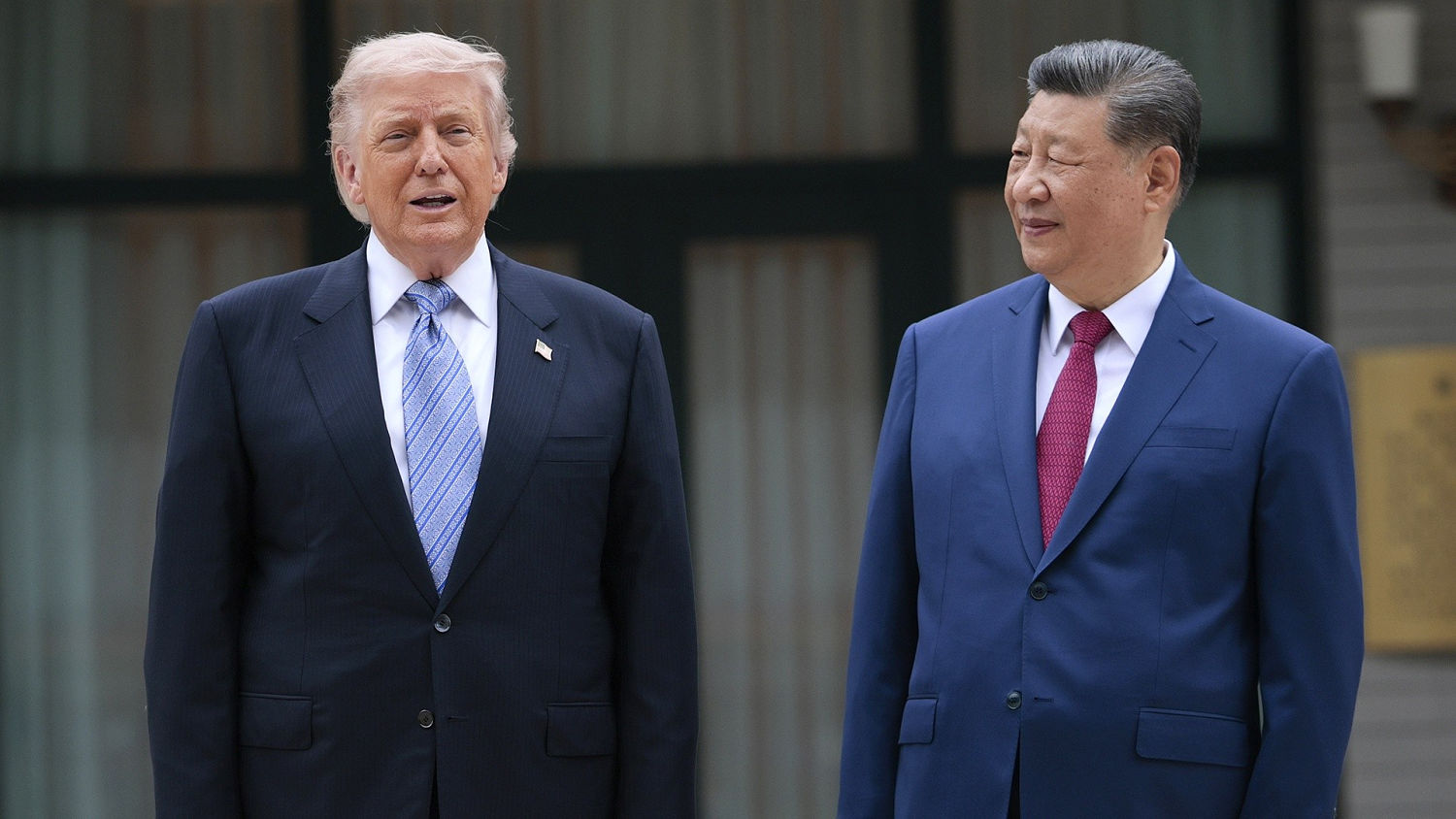
President Donald Trump has wrapped up his much-anticipated, high-stakes visit to China, declaring the summit with President Xi Jinping a resounding success. Yet, for many in Washington and across American industry, the immediate results remain shrouded in a degree of ambiguity, with no grand pronouncements of transformative new trade deals or substantial, verifiable purchases of American goods.
While the White House has lauded the trip as a critical step forward in bilateral relations, a deep dive into the specifics reveals a more nuanced picture. The president alluded to a potential breakthrough for American aviation giant Boeing, suggesting a deal was struck for the sale of more aircraft to Chinese companies. However, details surrounding the value, volume, and timeline of such a transaction remain conspicuously scarce, leaving analysts to parse through the often-optimistic rhetoric for tangible outcomes that directly benefit American workers and businesses.
The US-China relationship is arguably the most significant geopolitical dynamic of the 21st century, encompassing a vast array of economic, security, and diplomatic considerations. For American consumers, businesses, and investors, the health of this relationship has direct and profound implications, influencing everything from the price of everyday goods to the stability of global supply chains and the competitiveness of key US industries.
The Stakes for American Trade
Before President Trump's arrival in Beijing, the anticipation among US trade representatives and industry leaders was palpable. The prevailing hope was for substantial commitments from China to reduce its massive trade surplus with the US – a figure that President Trump has repeatedly highlighted as unfair and unsustainable. American companies have long voiced concerns over market access restrictions, intellectual property theft, and forced technology transfers, all of which create an uneven playing field.
While the summit undoubtedly facilitated direct, high-level dialogue between the two leaders, the absence of immediate, headline-grabbing trade agreements has prompted questions. Was the trip primarily about relationship-building, or were concrete economic concessions expected? The administration's focus on a 'rebalancing' of trade relations suggests the latter, yet the path to achieving this remains fraught with challenges.
The referenced Boeing deal, if confirmed with robust details, would represent a significant win for American manufacturing and employment. Boeing is a major exporter, and increased sales to China, one of the world's fastest-growing aviation markets, would ripple through its vast domestic supply chain, supporting jobs across numerous states. However, without specifics, the claim functions more as a placeholder for potential future gains rather than an immediate economic victory.
Expert Analysis and Context
Kristin Welker, moderator of NBC's Meet the Press, offered valuable insight into the summit's dynamics. Her analysis, shared on TODAY, likely underscored the diplomatic tightrope walk inherent in US-China relations. Navigating China's complex economic landscape, characterized by state-owned enterprises and a tightly controlled market, requires a blend of assertive negotiation and strategic partnership.
Background context is crucial here. The US trade deficit with China reached approximately $346.8 billion in 2017, a figure that has been a consistent point of contention for the Trump administration. Beyond tariffs, the US has sought to address non-tariff barriers that disadvantage American companies, such as opaque regulatory processes and subsidies for Chinese industries. Any summit between these two economic titans is inherently about more than just a few isolated deals; it's about setting the tone for future engagements and shaping the global economic order.
For many US economists, the long-term goal isn't just to sell more American products to China, but to ensure fair and reciprocal market access. This includes robust protections for intellectual property, an end to forced technology transfers, and a level playing field for American companies operating in China. Without progress on these foundational issues, any individual trade deal, while welcome, might be seen as a temporary reprieve rather than a systemic solution.
Implications for Americans
What does this summit mean for the average American? In the short term, the direct impact might not be immediately apparent. The rhetoric of 'success' from the White House, even without clear deliverables, could be intended to instill confidence in the administration's ability to tackle complex international challenges. For businesses, particularly those in sectors like aviation, agriculture, and energy, the hope remains that this high-level engagement lays the groundwork for future opportunities and a more favorable trade environment.
However, the lack of immediate, detailed breakthroughs also signals that resolving deep-seated trade imbalances and market access issues with China is a marathon, not a sprint. Consumers should understand that while increased exports of American goods could eventually lead to job creation and economic growth at home, the structural changes needed to fundamentally alter the US-China trade dynamic are complex and will likely unfold over years, not days.
Furthermore, the broader geopolitical implications cannot be ignored. A stable, albeit competitive, relationship between the US and China is vital for global stability. While economic discussions often dominate the headlines, issues like North Korea's nuclear ambitions and regional security were undoubtedly on the agenda, underscoring the multifaceted nature of this bilateral relationship.
Looking Ahead: The Path Forward
As President Trump departs Beijing, the immediate post-summit period will be critical for clarifying the actual outcomes and translating the spirit of cooperation into concrete action. American businesses and policymakers will be closely watching for follow-up announcements, detailed memorandums of understanding, and verifiable data regarding any new trade commitments. The true measure of this summit's success will not be found in the immediate declarations, but in the sustained progress made on key trade issues and the fostering of a more balanced and equitable economic relationship between the world's two largest economies. The dialogue has been opened at the highest level; now, the hard work of implementation and negotiation truly begins, with profound implications for the American economy and its place in the global landscape.




💬 Comments (0)
No comments yet. Be the first to share your thoughts!
Leave a Comment