
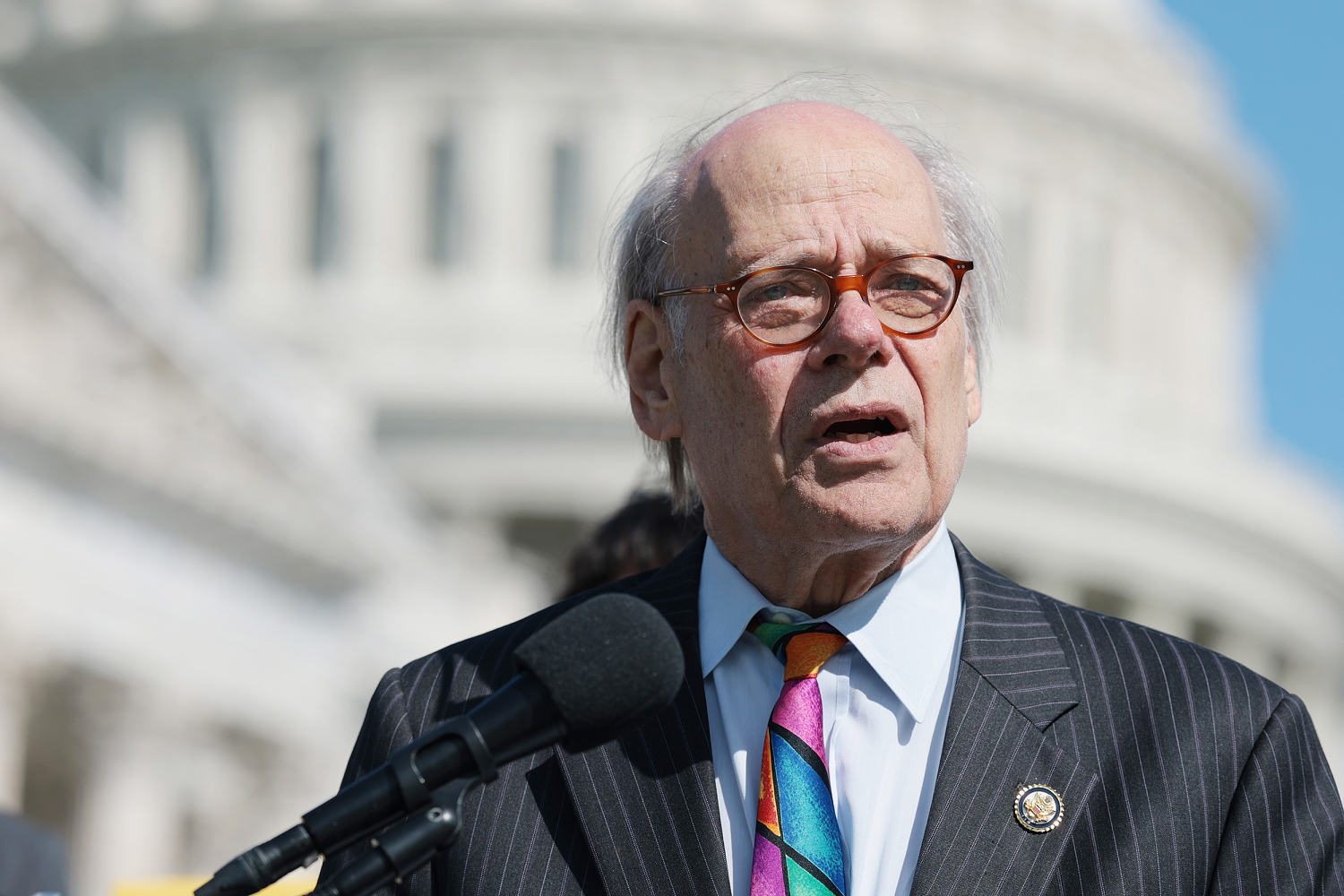
A political earthquake just hit Tennessee, and its aftershocks are reverberating across the nation. Veteran Democratic Congressman Steve Cohen, a familiar face on Capitol Hill representing Memphis for nearly two decades, announced Friday he will not seek re-election. His decision isn't a simple choice but a direct casualty of a Republican-led redistricting plan that critics — including Cohen himself — argue systematically silences Black voters and redraws the political map in Tennessee to ensure GOP dominance. This isn't just a local spat; it's a stark illustration of a nationwide battle over electoral maps, with profound implications for American democracy and the balance of power in Washington.
Cohen, in a fiery statement, didn't mince words: “Last week Tennessee Republicans silenced the Black vote here in Memphis to make Republican victories likely.” His former 9th District, a majority-Black stronghold, has been carved into three pieces by the new map, enacted by the Republican-controlled state Legislature and Governor Bill Lee. This move effectively dilutes the voting power of a traditionally Democratic base, a tactic critics decry as blatant gerrymandering. The political landscape Cohen is leaving behind is not the one he entered, and his departure signals a dangerous precedent for minority representation across the country.
The National Context: A Broader Attack on Voting Rights
This seismic shift in Tennessee isn't happening in a vacuum. It follows closely on the heels of the Supreme Court's controversial decision in Callais v. Louisiana, a ruling that significantly weakened key provisions of the Voting Rights Act and sharply curtailed the use of race in drawing congressional districts. This ruling has been interpreted by many as an open invitation for state legislatures, particularly in the South, to redraw maps in ways that favor their party, often at the expense of minority voters and incumbent Democrats. The National Black Caucus, a crucial voice for African Americans in Congress, has sounded the alarm, warning that as many as a third of its members could be ousted due to these aggressive redistricting efforts.
For American voters, especially those concerned with fair representation, these developments are deeply troubling. The ability of communities to elect representatives who truly reflect their interests is fundamental to a functioning democracy. When districts are manipulated to predetermine outcomes, it erodes public trust and discourages participation. This isn't just about party politics; it's about the very integrity of our electoral system. The implications extend beyond state lines, affecting the national political discourse and potentially impacting the legislative agenda in Washington for years to come.
Expert Analysis: The Erosion of Minority Representation
Political scientists and legal experts are closely watching these developments. Dr. Eleanor Vance, a professor of constitutional law at a prominent East Coast university, explains, “What we're seeing in Tennessee and other states is a highly effective, and often legal, way to consolidate power. By breaking up historically cohesive voting blocs, particularly minority communities, you can flip districts from competitive or safe Democratic to safely Republican. The Callais decision gave state legislatures more latitude, and they are clearly using it.”
The impact on the Congressional Black Caucus is particularly concerning. Losing a significant portion of its membership would diminish a powerful voice for civil rights and racial justice in Congress. For many Americans, particularly African Americans, this feels like a rollback of progress made over decades. The fight for voting rights has been long and arduous, and these redistricting battles represent a new front in that ongoing struggle.
Implications for Americans: A Less Representative Congress
So, what does Cohen's retirement and the broader redistricting trend mean for average Americans? First, it could lead to a less representative Congress. If districts are drawn to favor one party over another, regardless of the will of the people, the resulting legislative body may not truly reflect the diversity of opinion and background across the country. This can lead to gridlock, a lack of compromise, and policies that are out of step with the needs of many constituents.
Second, it further exacerbates political polarization. When elected officials are only accountable to a hyper-partisan base within their gerrymandered districts, they have little incentive to reach across the aisle or consider broader national interests. This fosters an environment of ideological rigidity and makes it harder to address critical issues facing the nation, from economic challenges to climate change.
Third, it undermines faith in democratic institutions. When voters feel their voice doesn't matter, or that the system is rigged, they become disengaged. This apathy can have long-term consequences for civic participation and the health of our democracy. Cohen himself alluded to this, stating he would reconsider his decision if legal challenges against Tennessee's map were successful, an acknowledgment of the ongoing fight for fair representation.
The current election cycle is already seeing a high number of House member retirements — Cohen’s is the 59th, the second-highest total since 1930. While some retirements are for personal reasons, many, like Cohen’s, are directly tied to the political climate and the relentless battle over congressional maps. This churn, fueled by redistricting, can lead to a less experienced Congress and a constant state of political flux.
Looking Ahead: The Battle Continues
The fight over Tennessee’s new map, and others like it, is far from over. Legal challenges are almost certainly on the horizon, with civil rights groups and Democratic organizations vowing to fight these new maps in court. The outcome of these legal battles will be crucial, not just for the affected states but for the future of voting rights in America. The ability of the courts to rein in partisan gerrymandering will determine whether future elections are genuinely fair or simply predetermined by legislative majorities. As Americans head to the polls this fall, the shadow of redistricting will loom large, shaping not only who represents them but also the very character of their democracy.



💬 Comments (0)
No comments yet. Be the first to share your thoughts!
Leave a Comment